

This is my first time trying to create a blog on my own. I just write whatever comes to my mind. Please don’t laugh at me.(Ha ha ha ha ha ha~)
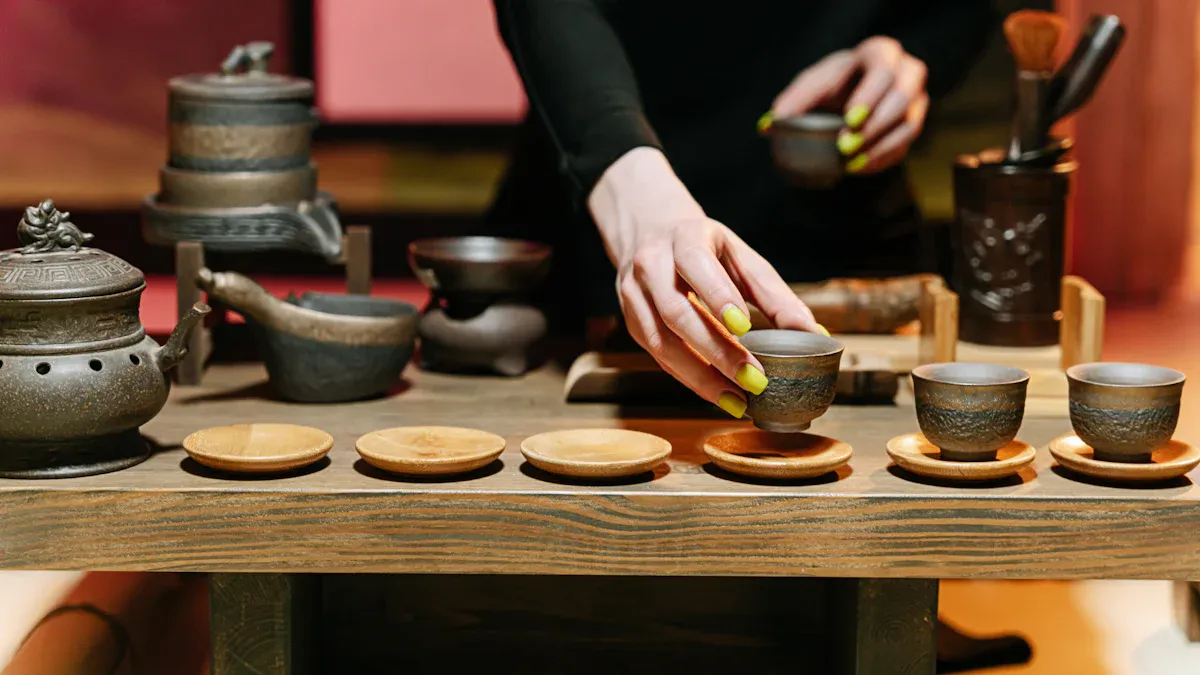
Phoenix Dan Cong Tea is easy for anyone to enjoy. You do not need to be an expert.
Trust your own taste and enjoy the experience your way.
Key Takeaways
Begin your tea tasting by drinking water first. This cleans your mouth. It helps you taste the special flavors of Phoenix Dan Cong Tea.
Use a white porcelain gaiwan(Chinese:盖碗) or cup to brew. This makes the smell stronger. It also lets you see the real color of the tea.
Brew with fresh, filtered water(100°C) that is boiling for strong flavors. Lower the temperature to about 180°F for sweeter tastes.
Take your time and enjoy each sip slowly. Notice how the flavors change with every new brew. Each cup feels different and exciting.
Try tea tasting with friends or family. This makes it fun and helps you remember the experience. You can explore many flavors together.
Preparation Steps for Phoenix Dan Cong Tea
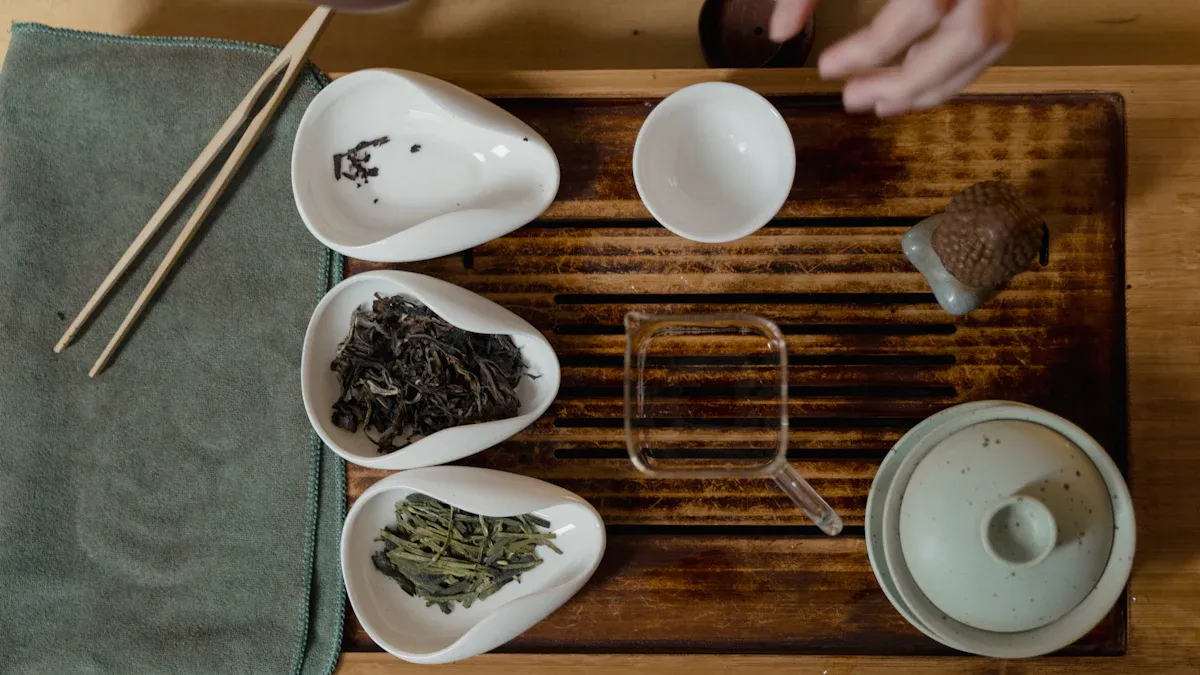
Clean Palate and Environment
You want every sip of Phoenix Dan Cong Tea to taste pure and true. Start by cleaning your mouth. Drink a glass of plain water. Skip snacks or flavored drinks before your tea session. This helps your taste buds focus on the tea’s natural flavors.
Pick a quiet spot for your tasting. Loud noises and strong smells can distract you. If you wear perfume or scented lotion, try to avoid it during your tea time. Even the smell of soap on your hands can change how you experience the tea.
Here’s a quick checklist to get ready:
Drink water to clean your palate.
Choose a peaceful place with fresh air.
Avoid perfumes, scented lotions, and strong kitchen smells.
Rinse your teaware with hot water, not soap.
A clean environment lets you notice every detail in your cup.
Choosing Teaware and Water
The right teaware makes a big difference. You want to use a white porcelain gaiwan or a small cup. Porcelain doesn’t absorb aromas, so you get the full fragrance and flavor. The simple white color also helps you see the tea’s true color.
Here’s why a gaiwan works best:
The lid acts as a strainer, making it easy to pour.
The shape lets tea leaves open up and release their aroma.
Porcelain is nonporous, so it won’t hold onto old flavors.
If you don’t have a gaiwan, a small white porcelain cup is a good choice. Avoid mugs or Western-style teapots. They can make the tea taste bitter or flat.
Water matters just as much as teaware. Use fresh, filtered water. Heat it to boiling, about 212°F (100°C). High temperatures help the leaves bloom and bring out bold flavors.
Note: Always rinse your teaware with hot water before brewing. Never use soap, because it can leave behind flavors that spoil your tea.
Here’s a table to help you remember:
Step | What to Do | Why It Matters |
|---|---|---|
Choose teaware | Use white porcelain gaiwan/cup | Keeps aroma and flavor pure |
Rinse teaware | Hot water only, no soap | Removes dust, no extra scent |
Pick water | Fresh, filtered, boiling | Extracts full flavor |
Adjust temperature | Boiling water | Release the aroma |
You’re now set up for a great tea tasting. With these steps, you’ll notice more layers in every cup of Phoenix Dan Cong Tea.
Inspecting and Brewing Phoenix Dan Cong Tea
Dry Leaf Inspection
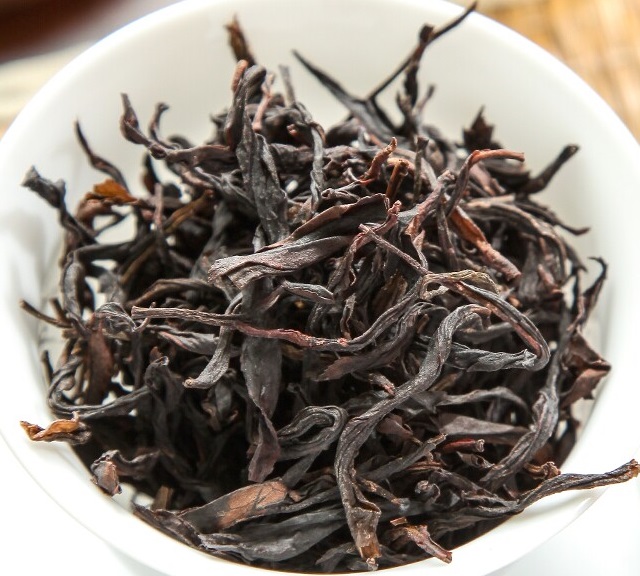
Before you brew, take a close look at the dry tea leaves. Hold them in your hand and notice their shape and color. Good leaves feel tight and sturdy. You might see deep brown or dark green shades. If you spot any broken pieces or strange smells, set those leaves aside. Trust your nose. Fresh Phoenix Dan Cong Tea leaves often smell like flowers, honey, or ripe fruit. Sometimes, you catch a hint of roasted nuts. If you want to get the full aroma, warm your gaiwan first(Pour boiling water into the teacup to warm it up.), then drop the leaves in and sniff again. The heat wakes up the scent and helps you notice more details.
Tip: Close your eyes when you smell the leaves. You might pick up new scents that surprise you.
Brewing Process
Now you’re ready to brew. Start by rinsing your teaware with hot water. This step warms everything up and keeps unwanted flavors away. Next, fill your gaiwan about three-quarters full with tea leaves. Pour boiling water over the leaves and quickly pour it out. This first rinse wakes up the tea and gets rid of dust.(In fact, good tea doesn’t require this step.)
The boiling water is poured vigorously into the pot, forcefully impacting the dry tea leaves. The first cup of tea is then poured out. At this point, the purpose is merely to refresh and moisten the tea leaves. The second cup of tea is brewed normally. There is no need to pay too much attention to the precise water pouring method or the rotating water pouring method. As long as the water is not poured into the center of the tea leaves, it will do. It’s a straightforward and direct way to bring out the true flavor.
When tasting the tea, don’t swallow the first sip immediately. Instead, smell the aroma of the tea. The sharp and delicate natural floral fragrance is the best. Take a small sip without too much concern. This is just to leave an impression on your taste buds. You don’t need to drink it all. Just pour it out. The first sip only needs to stay in your mouth for a short time to experience the tea.
For the third tea, you can drink more. Let the tea fully stay in your mouth. Close your eyes and focus your attention on the taste buds.
Then try chewing the tea in your mouth – let each part of your mouth come into contact with it.
During this process, keep your mouth slightly open to allow some air to come into contact with the tea soup in your mouth. Fully experience the changes in the taste of the tea soup, the duration of the aroma, the changes in the aroma in the mouth, the smoothness and lubrication of the tea soup when it reaches the throat, the changes in the aftertaste, and the degree of awakening and aftertaste.
If your memory is good enough, you can remember the characteristics of this tea and then proceed to the normal tasting of the next tea. The tasting of tea is generally divided into a wave-shaped trend stage. As the number of infusions increases, there is a phenomenon of no taste at the beginning, then to taste, reaching the peak, and then declining. This can all be understood by everyone.
Note: Don’t rush. Enjoy each step and let the tea show its character.
Tasting Phoenix Dan Cong Tea
Observing Color and Aroma
When you pour your first cup, take a moment to look at the color. Phoenix Dan Cong Tea starts with a light pink shade. As you brew more infusions, the color changes to golden and then to a warm orange with hints of brown. The liquid looks clean and bright in your cup.
Now, bring the cup close and breathe in the aroma. You might notice a honey-like scent, almost like nectar or fresh grapes. The smell is complex. Sometimes you catch floral notes, like orchids or geraniums. Other times, you sense a gentle roasted smell. Each infusion brings something new.
Light pink color in early brews
Golden and warm orange color in later infusions
Clean and bright appearance
Honey-like aroma, floral notes, and roasting hints
Tip: Close your eyes when you smell the tea. You may notice more layers in the aroma.
Professional tea judges use special techniques to describe what they smell. Here’s a table showing some common aroma types and their reference compounds:
Descriptor | Reference Aroma Monomer |
|---|---|
Floral | 3,7-dimethyl-1,6-octadien-3-ol |
Fruity | (Z)-3,7-dimethyl-2,6-octadien-1-ol |
Fresh | (Z)-2-hexenal |
Green | cis-3-hexen-1-ol |
Roasted | furfural |
Herbal | (Z)-3-methyl-2-(2-pentenyl)-2-cyclopenten-1-one |
You can rate the aroma from odorless (0) to extremely strong (3). Try to notice which scents stand out most for you.
Savoring Flavor Notes
Take a sip and let the tea roll over your tongue. Phoenix Dan Cong Tea offers a wide range of flavors. You might taste honey orchid, yellow gardenia, or even ginger flower. Each variety has its own special taste. The flavors feel bright and lively. Some teas have a sweet finish that stays with you.
You may notice the flavor changes with each infusion. The first cup might taste light and floral. Later cups can become richer, with more fruit or roasted notes. The tea’s aromatic intensity makes every sip interesting. The finish lingers, so you keep tasting the tea even after you swallow.
Try to describe what you taste in your own words. There’s no right or wrong answer.
Identifying Texture and Aftertaste
Texture is how the tea feels in your mouth. Phoenix Dan Cong Tea feels rich and smooth. The liquid glides over your tongue and leaves a pleasant sensation. You might notice the tea feels thicker or silkier than other teas.
After you swallow, pay attention to the aftertaste. A good Phoenix Dan Cong Tea leaves a sweet and floral flavor that lasts. The aftertaste is gentle and warm. Sometimes you taste a hint of flowers or honey long after your sip. The balance of sweetness and floral notes gives the tea depth.
Rich and smooth texture
Lingering sweetness in the aftertaste
Floral notes that persist after drinking
Balanced flavors that make each cup memorable
Note: The best way to learn is by tasting. Each session helps you discover new textures and flavors.
Common Flavor Profiles
Fruity and Floral Notes
When you taste Phoenix Dan Cong Tea, you step into a world of flavors. Most people notice fruity and floral notes right away. Some teas smell like honey, while others remind you of gardenias or orchids. You might even pick up hints of sweet potato or ginger flower. Each cup feels like a new adventure.
Here’s a quick look at the main flavor categories you can expect:
Description | |
|---|---|
Mi Lan Xiang | Sweet, honey orchid aroma |
Fan Shu Xiang | Sweet potato flavor |
Ba Xian | Unique, complex taste |
Huang Zhi Xiang | Gardenia fragrance |
Tong Tianxiang | Heavenly floral scent |
Jiang Hua Xiang | Ginger flower fragrance |
Yu Lan Xiang | Magnolia fragrance |
Zhi Lan Xiang | Orchid fragrance |
Shared Traits | Mineral notes and floral astringency |
You’ll notice that all Dan Cong teas have a mineral “rock tea” character. The floral astringency makes each sip lively and refreshing.
Tip: Try to guess the flower or fruit you taste. You might surprise yourself!
Popular Varietals (Mi Lan Xiang, Ya Shi Xiang)
Let’s talk about two famous types you’ll often find: Mi Lan Xiang and Ya Shi Xiang.
Mi Lan Xiang: This tea is known for its honeycomb aroma. When you brew it, you get waxy, sweet notes that remind you of honey and orchids. It’s a bit tricky to harvest and process, but the reward is a rich, smooth cup.
Ya Shi Xiang: Don’t let the name “Duck Shit Aroma” fool you! This tea comes from Pingkengtou Village and grows in special soil. The flavor is buttery and bright, with a strong jasmine scent. You’ll taste a pleasant sweetness and a bold floral kick.
Here’s a table to help you compare:
Feature | Mi Lan Xiang (Honey Orchid) | Ya Shi Xiang (Duck Shit) |
|---|---|---|
Aroma | Waxy, honeycomb, orchid | Buttery, jasmine, very aromatic |
Taste | Sweet, smooth | Sweet, complex, floral astringency |
Scoring and Evaluating Phoenix Dan Cong Tea
Aroma, Water, Activity, Balance
You might wonder how to judge a cup of tea. Many tea lovers use a simple scoring system with four parts: aroma, water, activity, and balance. Each part helps you notice something special in your cup.
Aroma: Smell the tea before you sip. Does it remind you of flowers, fruit, or honey? A strong, pleasant aroma means good tea.
Water: Look at the color and clarity. Clean, bright tea shows quality. The water should feel smooth and fresh.
Activity: Taste the tea and pay attention to how the flavor changes. Does it start sweet and then turn floral? Good tea feels lively and keeps changing in your mouth.
Balance: Think about how all the parts work together. The best tea has a nice mix of aroma, taste, and texture. Nothing should be too strong or too weak.
You can use a table like this to keep track:
Factor | What to Look For | Your Score (1-10) |
|---|---|---|
Aroma | Floral, fruity, honey | |
Water | Clean, bright, smooth | |
Activity | Flavor changes, lively | |
Balance | Harmony, no bitterness |
Tip: You don’t need to be an expert. Trust your senses and write down what you notice.
Personal Enjoyment and Learning
You can make tea tasting fun and personal. Try warming up your vessel before brewing. Fill your gaiwan about two-thirds full so the leaves have space to expand. Rinse the leaves before your first infusion. Watch the color of the tea liquor to know when it’s ready. Over time, you’ll build your own intuition.
Here are some ways to develop your own preferences:
Taste different varietals and write down your thoughts.
Adjust the brewing time for each infusion. Add 20-30 seconds for later brews.
Share your notes with friends or family.
Don’t rush. Enjoy each sip and see how the flavors change.
Remember, your favorite tea is the best tea for you. Keep tasting, keep learning, and let your own experience guide you.
Troubleshooting and Tips
Avoiding Bitterness
Nobody likes a bitter cup of tea. You want your Phoenix Dan Cong Tea to taste smooth and sweet. Sometimes, bitterness sneaks in, but you can stop it. Here are some common reasons your tea might taste bitter:
You use leaves that are too young. These leaves can make your tea taste strong and astringent. Try picking or buying tea made from buds that have opened into two or three leaves.
You brew with a mug or a Western-style teapot. These methods often lead to bitterness and under-extraction. The gongfu tea method works best for Phoenix Dan Cong. It lets the leaves open up and release their flavors slowly.
You steep the tea for too long. Short infusions help keep the taste balanced. Start with 15 seconds and adjust as you go.
You use water that is too hot or not fresh. Boiling, filtered water brings out the best flavors. Old or reheated water can make the tea taste flat or harsh.
Tip: If your tea tastes bitter, try using fewer leaves or shortening the steep time. You can also lower the water temperature a little.
Enhancing the Experience
The balance in tea may not be easily understood by many people. Some say that Phoenix Single Variety Tea should be as fragrant as possible, but this is not the case for many high-quality varieties of old fir and top-level Phoenix Single Variety Tea. They all emphasize the balance between fragrance and water. Why is this so? Phoenix Single Variety Tea is hailed as the “perfume” of tea. This does not mean that the fragrance must be as intense as that of perfume. What matters more is balance. Among them, “fragrance balance” is more emphasized. Fragrance is the characteristic, water is the support. Fragrant but not greasy, with fragrance in the water, sweet like mountain spring water, clear and refreshing, seemingly with the liveliness of no other substance, is of the highest quality. Fragrant and moist water is of the second quality. Fragrant but coarse water is of the common quality. Without fragrance or water is of the inferior quality.
(茶中的平衡性或许很多人没办法理解,有人说凤凰单丛就是越香越好,但是跟多优质品种的老枞以及顶级的凤凰单丛都是讲究香和水的平衡,为什么这么说呢,凤凰单丛被誉为茶中”香水“并非说香一定像香水一样浓烈的香才是好,平衡更为重要,其中”香水平衡更为讲究,香是特点,水是支撑,香而不腻,水中含香,甘甜如山泉,清冽,爽润,看似无物品之活跃为上等。香高水润为次之,香高而水粗为常之,无香无水为劣之。)
😊 Remember, tea tasting is about enjoyment. Trust your senses and have fun with every cup!
Making Tasting Social and Fun
Sharing with Friends and Family
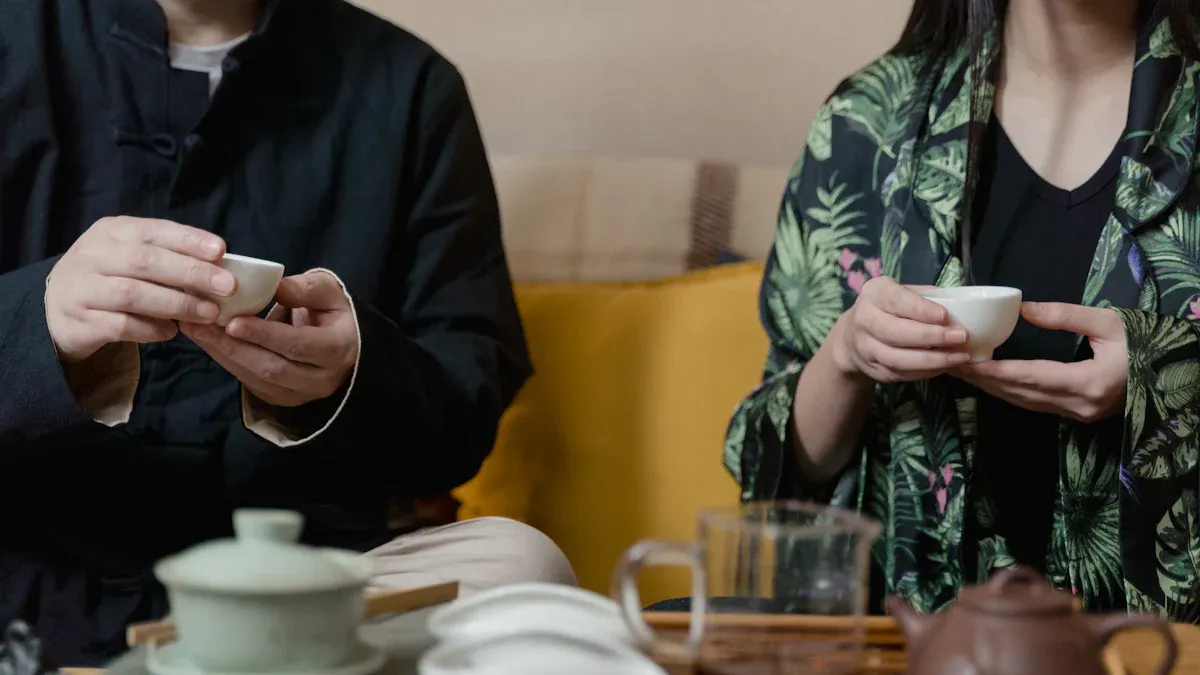
You don’t have to taste Phoenix Dan Cong Tea alone. Invite your friends or family to join you. When you share tea, you create a special moment. The unique flavors and changing aromas become a fun topic for everyone. You might laugh together as you try to guess the scent or flavor in each cup. The energy from Phoenix Dan Cong Tea lifts everyone’s mood. You feel the joy in the room as you sip and chat. Tea tasting can turn a simple afternoon into a memorable gathering.
You also build stronger connections. Sharing tea helps you relax and enjoy each other’s company. The experience feels uplifting. You notice smiles and hear stories. Phoenix Dan Cong Tea brings people together and makes every gathering brighter.
Tip: Try brewing several infusions and let everyone describe what they taste. You’ll discover new flavors and create lasting memories.
FAQ
How much tea should I use for one session?
You want to fill your gaiwan about two-thirds full with dry leaves. For a small cup, use one teaspoon. This amount lets the leaves open up and gives you a rich flavor.
Can I reuse Phoenix Dan Cong Tea leaves?
Yes! You can brew the same leaves more than 10 times.Each infusion brings out new flavors. Try adding 20 seconds to each steep for a different taste.
What water temperature works best?
Boiling water works well for most Phoenix Dan Cong teas.
Why does my tea taste bitter sometimes?
Bitterness happens when you steep the tea too long or use too many leaves. Try shorter infusions and use less leaf. You can also lower the water temperature a little.
Can I drink Phoenix Dan Cong Tea with food?
You can, but you get the best flavor when you taste it alone. Food can hide the tea’s delicate notes. Drink a glass of water before your tea session for a clean palate.